|
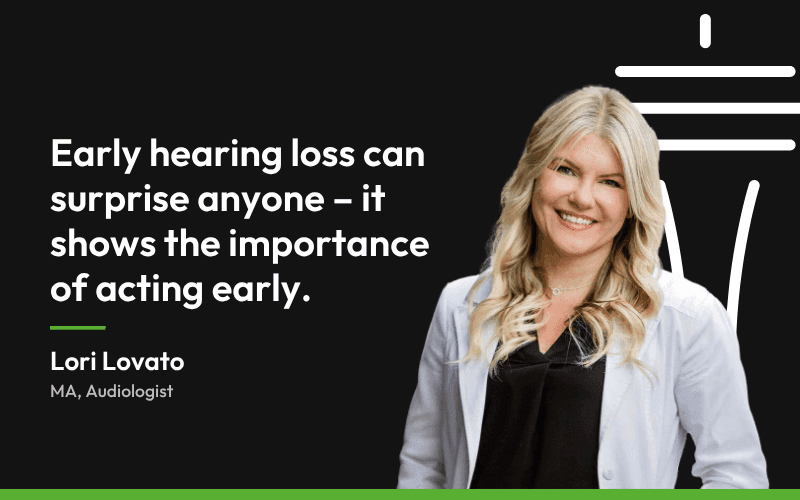
Lori Lovato MA, Audiologist
How Hearing Aids Helped Alda Protect Her Quality of Life
Nearly forty years ago, Alda faced a challenge many people her age never expect: hearing loss in her early 30s.
“I was in my 30s, so I was very reluctant to admit my problem,” she shares.
Like many younger adults, she didn’t see herself as someone who might need hearing aids, even though her family kept noticing. “It was awkward hearing comments about my hearing all the time,” she admits.
At that age, it’s easy to dismiss or minimize hearing difficulties. Many younger adults assume hearing loss only happens later in life or that it’s not a serious problem. For Alda, hearing issues were starting to affect daily conversations, work, and her social life, but she didn’t want to face it.
Her sister had a clever idea to test Alda’s hearing. Borrowing their dad’s hearing aid and placing it to Alda’s ear, she suddenly heard the rustling of paper across the room.
Alda recalls, “That sound made me realize just how much I had been missing every day without even knowing it.” It was a turning point that revealed the hidden effort she had been putting into simply keeping up with conversations.
For someone who thought they were “managing just fine,” the experience was eye-opening. Suddenly, the realization hit: hearing loss isn’t just a minor inconvenience – it changes the way we interact, how much energy we spend listening, and even how confident we feel in everyday situations.
Realizing Just How Much She Was Missing
Alda didn’t hesitate once she realized the extent of her hearing loss. She opened her first credit card to get her first pair of hearing aids, a step she admits felt both exciting and nerve-wracking.
“I remember my amazement at how much easier my life was after I got hearing aids,” she says. “I’m sure my family and friends got tired of hearing me talk about it!”
Before hearing aids, even familiar conversations required constant mental effort. Alda had been unknowingly straining her attention, reading lips, and guessing words.
“You don’t realize how much effort is used just trying to hear and understand people around you,” she explains. The moment she started hearing clearly again, she noticed how exhausting that effort had been, and how freeing it was to finally relax and listen naturally.
This turning point also highlighted a broader truth about hearing loss: it often goes unnoticed until it’s addressed. Many people live with mild or moderate hearing issues for years without realizing the toll it takes on energy, focus, and confidence.
Alda’s story shows how small steps, like a clever test from a family member, can lead to life-changing decisions. Once she got her hearing aids, everyday interactions became easier, her social confidence improved, and she could fully participate in work, family, and community life without strain.
The Relief of Hearing Well Again
Life with hearing aids transformed Alda’s daily experience. No longer straining to hear, guessing at conversations, or feeling exhausted, she was finally able to engage fully in her work, home, and social life.
“Once the adjustment period is over, the relief is immense,” she explains.
Before getting hearing aids, even simple tasks could be draining. Conversations in noisy environments, family gatherings, or meetings at work required constant effort. The stress of trying to follow along could leave Alda mentally exhausted by the end of the day.
Her friends and family noticed a change as well. “They could see I wasn’t struggling as much,” she says. “Conversations felt easier, and I felt more connected.”
Regaining the ability to hear clearly had emotional benefits, too: it restored Alda’s confidence, reduced frustration, and made her feel fully present in her life again.
For younger adults, this kind of improvement is especially significant, as clear communication impacts careers, relationships, and day-to-day responsibilities. Addressing hearing loss early can prevent the isolation, stress, and misunderstandings that untreated hearing issues often bring.
Why Highline Hearing Made All the Difference for 25 Years
Alda has relied on hearing aids for almost 40 years, and for 25 of those years, she has trusted Highline Hearing. “They have been immensely supportive and understanding,” she says. “Every visit, they take the time to listen, understand my needs, and guide me through new technology.”
Our team at Highline Hearing has ensured that Alda stays current with the latest hearing aid advancements, helping her preserve her quality of life. Alda adds, “I was lucky that technology was one step ahead of my hearing deterioration, and Highline made sure I stayed on track.”
Our consistent support gave her confidence through each stage of her hearing journey, and Alda felt understood every step of the way. It reminded her that hearing care works best when it’s not a one-time appointment but a long-term relationship built on compassion and expertise.
Alda’s Message for Anyone Hesitating: Take Your Hearing Seriously, Sooner, Not Later
Alda’s experience is a powerful reminder: hearing loss can affect adults of any age. Acting early is empowering, not embarrassing.
“Hearing loss doesn’t mean your life shrinks – it expands when you address it,” she shares. By taking her hearing seriously in her 30s, she avoided years of unnecessary struggle.
Getting help with hearing aids can restore clarity, confidence, and emotional well-being. “Highline Hearing didn’t just fit devices – they supported my journey, protected my hearing, and helped me live fully for decades,” she says.
Alda’s story encourages anyone hesitating to take that first step: the sooner you act, the sooner you can stop straining, guessing, and missing out on life’s moments.
Protect your hearing before it’s too late. Schedule a consultation with Highline Hearing today.
FAQs
1. How do I know if I might have early hearing loss?
Pay attention to signs like frequently asking people to repeat themselves, turning up the TV volume, or struggling in noisy environments. Early detection is key.
2. How long does it take to adjust to new hearing aids?
Adjustment varies by individual, but most people notice clearer sound and less listening effort within a few weeks.
3. Can modern hearing aids keep up with progressive hearing loss?
Yes. Advances in technology allow hearing aids to adapt to gradual changes, preserving sound quality and supporting long-term hearing health.
Source
https://www.nidcd.nih.gov/health/hearing-aids – This resource explains how hearing aids work and their benefits, supporting the experience of improved quality of life.

Lori Lovato MA, Audiologist
Lori is a lifelong resident of the Tri-Cities. She and her husband Anthony are proud to be raising their family here. She attended Washington State University where she received a bachelor’s degree in speech and hearing sciences and her master’s degree in audiology. Lori began practicing audiology in the Tri-Cities in 1993. During this time, she has worked in a variety of clinical settings, including private practice and ear, nose, and throat physicians’ offices. She has spent her career focused on assisting those with hearing difficulties through the use of hearing aids, listening strategies, assistive devices, and counseling. She is experienced in working with both adult and pediatric patients. It is important to Lori to develop close relationships with each and every patient, as she helps them develop better communication strategies to live a fuller life.
Search
Concerned About Your Hearing?
Please feel free to request a callback and we’ll get in touch with you as soon as we can to help. Alternatively, you can call us directly at (206) 246-8677 for a more immediate conversation.
Popular Blogs